In this section, we bring you selected eclipse images to inspire you to observe a solar eclipse…
Eclipses and the Corona
Initially, we will share a selection of images of the solar corona… Indeed, the corona is the most spectacular part of the sun that can be viewed only during the total phase of a total solar eclipse…
During partial solar eclipses, the solar corona cannot be viewed… Only people in a narrow area on the surface of the earth can view a total solar eclipse… They are in the path of totality…
There is a much larger area from which solar eclipses are visible, but in this area it is only possible to see a partial eclipse… And those who view a partial solar eclipse have no idea of the difference between a partial and a total solar eclipse…
I, Norma, myself have never had the privilege to view a total solar eclipse… I intend to view my first total solar eclipse in Spain in 2026… I live in Brazil, in the South, and I was only able to see the partial phenomenon in 1993… Then I saw the annular solar eclipse that I shared here on the website, in 2023…

Photos of an annular total solar eclipse (left) and a total solar eclipse (right). The annular eclipse is shown with a dark background, as it is only safe to view with protection. On the right, you can see the corona, visible only during totality, when the Moon completely covers the Sun from view. Left, Annular Eclipse: Stefan Seip (Oct 3, 2005). Right, Total Eclipse, NASA/Aubrey Gemignani (August 21, 2017). Source: https://science.nasa.gov/solar-system/skywatching/night-sky-network/solar-eclipses-in-2023-and-2024/
These images can also be used to compare the annular solar eclipse that was visible in 2023 in the Americas, and the 2024 total solar eclipse that was visible in the United States…
The website that contains the following image talks about the total solar eclipse of 2024… On April 8, 2024, much of North America experienced a solar eclipse.. The Moon’s shadow path covered Mexico’s Pacific coast, crossed the United States from Texas to Maine, and exited North America via Newfoundland, Canada, continuing into the Atlantic Ocean…
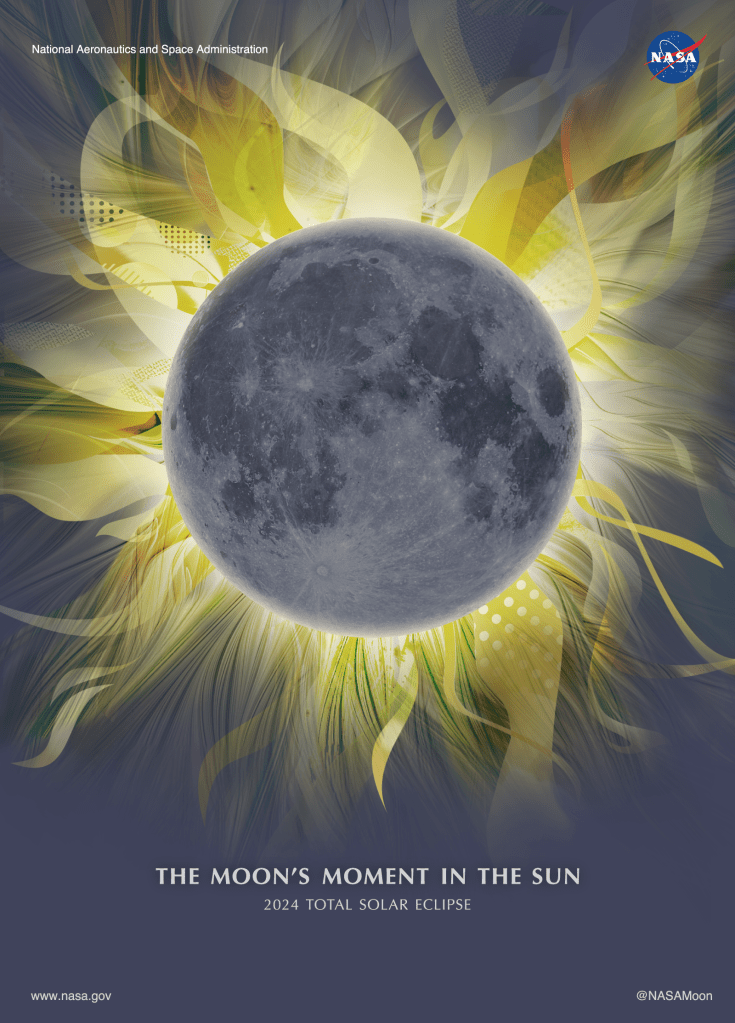
Artist’s representation of a total solar eclipse, with a new moon in the foreground and the corona visible in the background. NASA/Vi Nguyen. Source: https://science.nasa.gov/solar-system/skywatching/eclipses/solar-eclipses/2024-solar-eclipse/total-solar-eclipse-2024-the-moons-moment-in-the-sun/
For those who have never seen a solar eclipse, it is useful to say that it is not possible to see moon’s craters as in the picture above… It is only the moon shadow covering the sun… So it appears black… As in the next image…
In this next image we can see the corona, but we can also see some solar prominences… These prominences can only be seen during total solar eclipses…
As you may see in our Eclipse Paintings and Pictures section, there are many artists who dedicated time representing events associated with solar and lunar eclipses, such as Jesus’ Crucifixion…
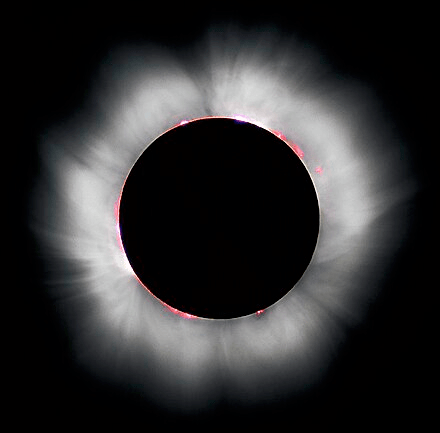
Total Solar eclipse in France. 11 August 1999. Credit: Luc Viatour/ https://Lucnix.be Source: https://pt.wikipedia.org/wiki/Coroa_estelar
The image above is a beautiful picture of the solar corona… We found that in a Portuguese language website…
Below, we can see an image of the solar corona from a distance… It is beautiful… Looks like science fiction…

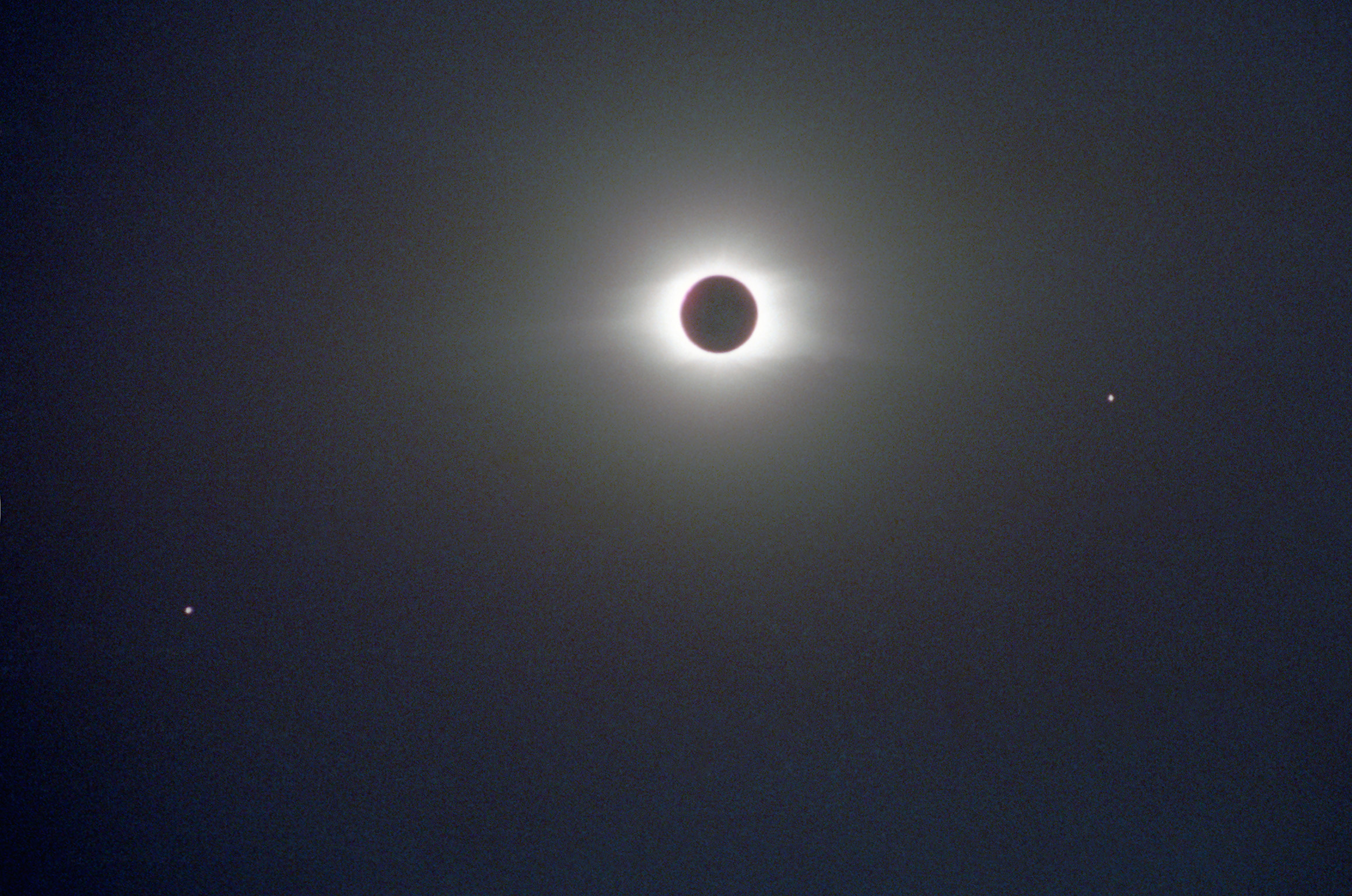
Totality as seen from Aruba on February 26, 1998. The dots to lower left and right of the eclipsed Sun are the planets Mercury and Jupiter, respectively. Credit: Robert Slobins. American Astronomical Society. Source: https://eclipse.aas.org/sites/eclipse.aas.org/files/Planets1998-RobertSlobins.jpg
The next figure shows a NASA image of the solar corona…

Image of the solar corona during a total solar eclipse on Monday, August 21, 2017 above Madras, Oregon. Credit: NASA/Aubrey Gemignani
Just below, according to Wikipedia “The solar corona with its coronal streamers stretching outward, as well as solar prominences (in red) along the limb of the earthshine illuminated Moon during a total solar eclipse.”
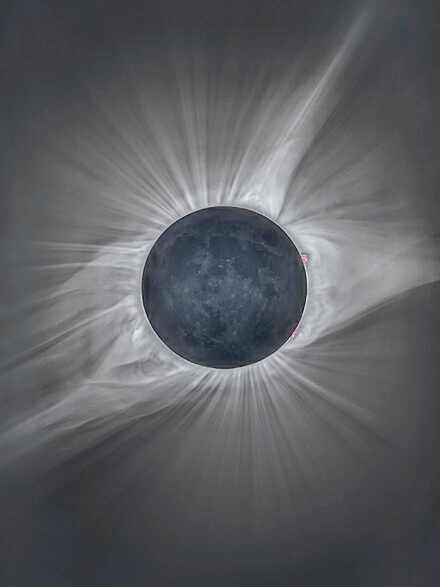
Credit: Michael S. Adler. Total solar eclipse image taken through Takahashi FS152 with a f6 focal reducer and a Canon 5D MarkIV, exposure bracketing was used in seven steps from 1/2 sec to 1/8000 sec. Image was processed in Photomatix 6 and Photoshop CC 2017. 20 August 2017. Source: https://en.wikipedia.org/wiki/Stellar_corona
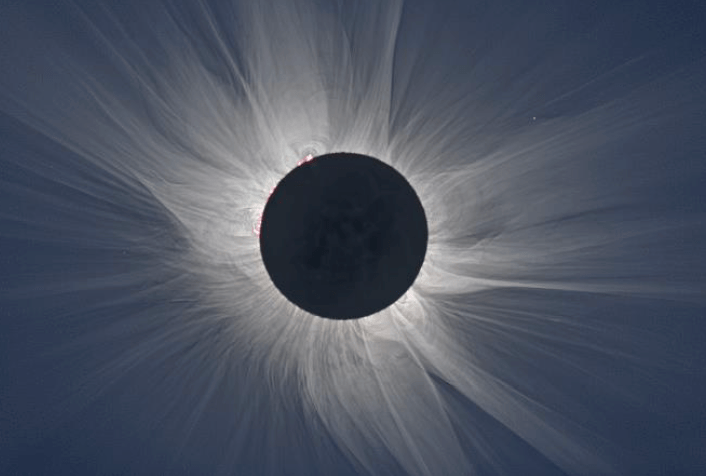
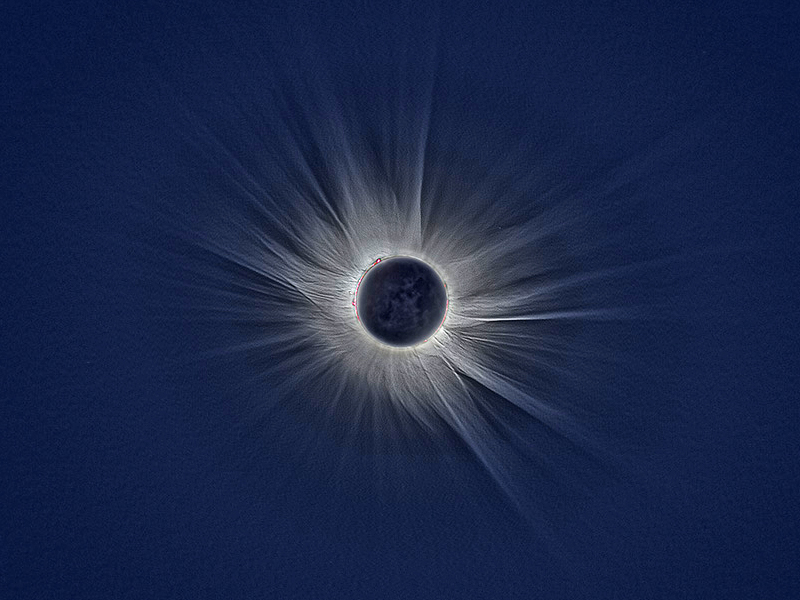
This NASA image is a highly processed composite of the features of the corona, taken with special equipment and with multiple images on top of one another. Credit. S. Habbel, M. Druckmüller, and P. Aniol. Source: https://mynasadata.larc.nasa.gov/mini-lessonactivity/what-suns-corona
In the last two images, the solar corona is more stretched out than the previous one… Note that there are differences among different eclipse images…
Another beautiful corona image…

Credit: Rick Fienberg. American Astronomical Society. The total phase of the March 9, 2016, solar eclipse as seen from aboard the cruise ship Le Soleál in the Molucca Sea off the coast of Indonesia.
You see below that the coronal image is even more different than the previous ones… It somehow looks like a child’s drawing… 🙂
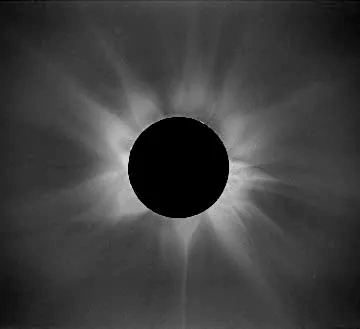
The Sun’s corona is visible during a total solar eclipse. Credit: NCAR/HAO. Source: https://scied.ucar.edu/learning-zone/sun-space-weather/corona
Another awe-inspiring solar corona image…
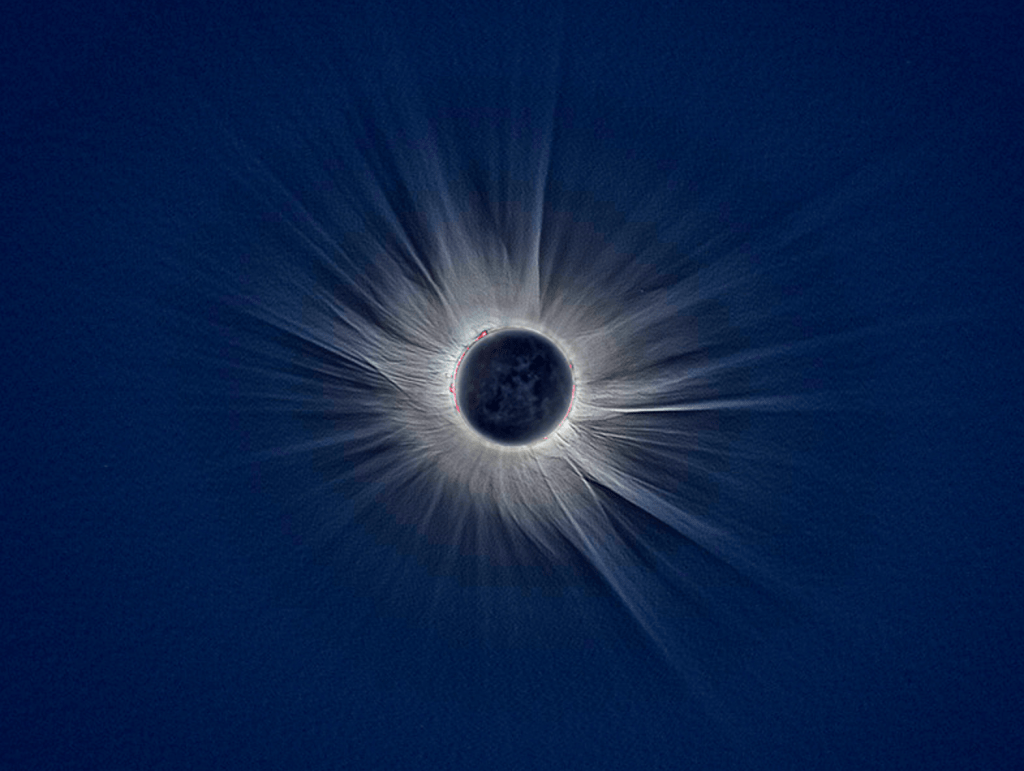
The total phase of the March 20, 2015, solar eclipse as seen from the Svalbard archipelago in the Arctic. Credit: Reinhold Wittich. American Astronomical Society. Source: https://eclipse.aas.org/sites/eclipse.aas.org/files/Totality-ReinholdWittich.jpg
Look at this spectacular image of the corona! Looks like a piece of art extracted from some Star Trek movie… Indeed, it looks like science fiction!
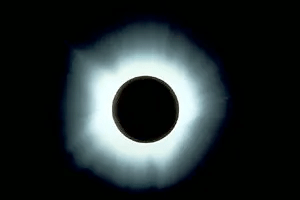
Total solar eclipse. The delicately structured glow of the solar corona seen during the March 7, 1970, total eclipse of the Sun. The corona is visible to the unaided eye only during total solar eclipses. Copyright AURA Inc./National Optical Astronomy Observatories/National Science Foundation. Source: https://www.britannica.com/science/corona-Sun
What a fantastic coronal image below! This is a different view of the solar corona… Please note that special filters were used to produce this image… This is not how the solar corona looks like when observed during a total solar eclipse… It is not colored…
I was at NASA Goddard Space Flight Center carrying out a Summer internship on the occasion of the August 1, 2008 total solar eclipse… Such an eclipse I remember, was visible in China…
It makes me remember the Ancient Chinese stories related to the total solar eclipse and the dragon in the sky that would swallow the sun or moon during solar or lunar eclipses…
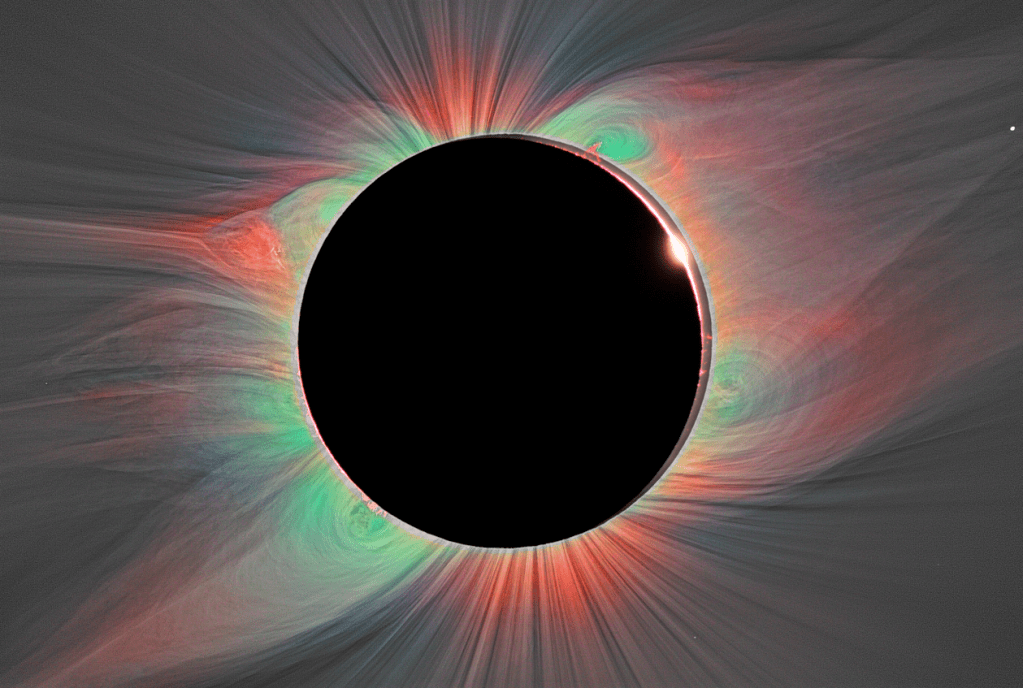
An overlay of white light, Fe XIV 530.3 nm (green), and Fe XI 789.2 nm (red) emission from observations during the total solar eclipse of 1 August 2008. Credits: Miloslav Druckmüller and Shadia Habbal. Source: https://www2.ifa.hawaii.edu/research/Sun.shtml
One more astonishing solar corona image…
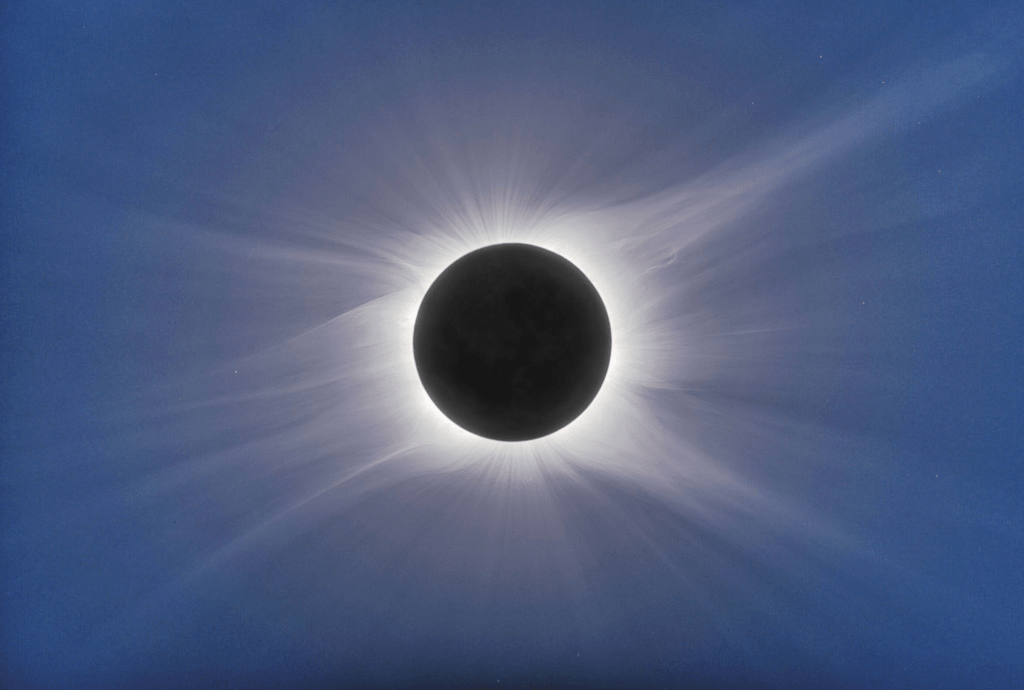
Totality as seen from Easter Island on July 11, 2010. Credit: Dennis DiCicco. American Astronomical Society. Source: https://eclipse.aas.org/sites/eclipse.aas.org/files/Totality2010-S%26T-DennisDiCicco.jpg
Eclipses and Landscapes
And now we will share more eclipse pictures, with beautiful landscapes from our earth…
The owner of the following image mentions that the picture he took of the total eclipse of the sun does not capture for example the behaviour of the animals… Indeed, animals change their behavior during a total solar eclipse… They might think night has suddently come…
The image author also says that a total solar eclipse is something addictive, and that he wants to see more and more total solar eclipses if he can…
Photo is available here – https://visualwilderness.com/post-processing/captured-great-american-eclipse
I hope I can visit Spain in 2026 to observe the total solar eclipse that will happen there! 🙂
The following image is made by an astrophotographer… Astrophotographers, as the name suggests, are professionals or amateurs who photograph celestial bodies, such as the sun and moon…
“What I learned from capturing my first total solar eclipse”- photo available here – https://alynwallacephotography.com/blog/2019/7/9/what-i-learnt-from-capturing-my-first-total-solar-eclipse
The author of the image mentions that there are not many people experienced in photographing solar eclipses but one of those people is Fred Espenak, the retired NASA astrophysicist behind mreclipse.com…
I (Norma) worked with Fred Espenak on occasion of my NASA internship at NASA Goddard Space Flight Center back in 2008… He provided unique guidance and insights to my research, part of which I share on this website…
Fred Espenak is responsible for the website EclipseWise, and part of my eclipse research is published there – https://www.eclipsewise.com/extra/NormaReis.html
Now let us look at this incredible picture that shows a person near the solar eclipse! Looks like art! It is astrophotography…
“How to photograph the solar eclipse,” photo here – https://iceland-photo-tours.com/articles/photography-tutorials/how-to-photograph-the-solar-eclipse
On their website, they say that seeing a total solar eclipse is like the world is standing still just for a moment… The temperature drops, the birds stop singing, your heartbeat even changes and everything turns completely quiet and dark for just that minute (or those minutes)…
Indeed, totality can reach to 7 minutes 30 seconds, but it can be only 2 minutes and 30 seconds depending on the case, so preparation for photography has to be planned before and meticulously to get the best results, as we saw in the picture above… This website teaches how to photograph a total solar eclipse – https://iceland-photo-tours.com/articles/photography-tutorials/how-to-photograph-the-solar-eclipse
In the following figure, we see the result of an astrophotographer who traveled farther, to the world’s northernmost town to see the total solar eclipse…
See figure here – A total eclipse at the top of the world. Source: https://www.pcmag.com/news/a-solar-eclipse-at-the-top-of-the-world
On the morning of March 20, the author stood in an ice-crusted field bounded by glaciers and snow-covered hills, waiting for the 2015 total eclipse of the Sun…
As we mentioned, total solar eclipses are not rare… They occur, on average, somewhere in the world every 18 months… The website mentions however that the umbra— the deep part of the Moon’s shadow, where it completely blocks the Sun — traces a narrow path across part of Earth’s surface, and the average interval between total solar eclipses for any given location is about 360 years…
And now, a lunar eclipse sequence of images… When the moon is eclipsed, it gets a blood color… It scared people in ancient times…
“Lunar Eclipse Blood Moon over Phoenix”, North Phoenix, Arizona. Photo here – https://mattsuess.com/making-blood-moon-lunar-eclipse-photo-part-1/
The annular solar eclipse on October 14, 2023 was visible in nine Brazilian states… Some nice pictures were taken… The following is one of them…
Surfer Ítalo Ferreira,” photo here – https://edilenemafra.com/geral/veja-fotos-do-eclipse-solar-anular-2023-pelo-brasil/
I had the privilege to be in Natal observing the annular eclipse of 2023… Natal was the Brazilian city with the largest period of annularity, which is when the ring of fire is visible… The ring of fire is the part of the sun which is not covered by the moon, and which resembles a ring…
References
- Visual Wilderness, https://visualwilderness.com/post-processing/captured-great-american-eclipse
- NASA Science, https://science.nasa.gov/solar-system/skywatching/eclipses/solar-eclipses/2024-solar-eclipse/total-solar-eclipse-2024-the-moons-moment-in-the-sun/
- Alyn Wallace, https://alynwallacephotography.com/blog/2019/7/9/what-i-learnt-from-capturing-my-first-total-solar-eclipse
- Iceland Photo Tours, https://iceland-photo-tours.com/articles/photography-tutorials/how-to-photograph-the-solar-eclipse
 Eclipses in History